

On-page SEO is everything you do on a page itself to help it rank: the title, the meta description, the headings, the content, the internal links, and the images. It is the part of SEO you fully control, which is exactly why it is worth getting right. Technical SEO gets Google to your page, and on-page SEO tells Google what the page is about and why it deserves to rank.
Calling every page “optimized” does not make it optimized. I can call a microwave a strategy, but lunch is still cold. Here is what on-page SEO actually involves, element by element.
The title tag still does the heavy lifting
Your title tag is one of the strongest on-page signals and the thing people see first in search results. Put the primary keyword near the front, keep it clear, and write it for a human deciding whether to click. Google’s guidance on title links is blunt about this: titles should describe the page accurately, not stuff keywords.
Aim for roughly 50 to 60 characters so it does not get cut off. One page, one focused title. If your title could apply to any company in any industry, it probably says nothing.
Meta descriptions earn the click
The meta description is the snippet under your title. It is not a direct ranking factor, but it heavily influences whether someone clicks, and clicks matter. Write 150 to 160 characters that include the keyword and a real reason to choose your result, then a soft nudge to act. Google’s snippet documentation explains how these are generated and when Google rewrites them.
Every page should have its own description. Duplicated descriptions across pages are a small, common, fixable waste, and a mild form of duplicate content while you are at it.
Headings give the page a skeleton

Use exactly one H1 per page, with your primary keyword, then H2s and H3s in a logical order to break up the content. Write headings as clear statements or the questions people actually ask, not vague labels. Headings help readers scan and help Google understand structure. Skipping heading levels or using them for styling instead of structure is a common own-goal.
A direct answer to the page’s main question should sit near the top, in the first paragraph. Do not bury it. Do not make Google or the reader dig for the point. That same answer-first habit is what I lean on when I am ranking for featured snippets, where Google lifts a clean block straight off the page.
Content, links, and images carry the rest
The rest of on-page SEO is substance:
- Content that matches intent. Answer what the searcher actually wants, thoroughly, in plain language and in your own words, which is a big part of why unique content matters so much. This starts with good keyword research so the page targets one clear search, and with keyword clustering so related terms group onto the right page instead of fighting each other.
- Internal links with descriptive anchor text, pointing to related pages. Link “our on-page SEO work,” not “click here.” This spreads authority and helps Google understand your site, especially when you organize those links around a pillar page that anchors each big topic.
- A few authoritative external links where they genuinely help the reader, and it is worth knowing the difference between dofollow and nofollow links so you link out on purpose.
- Clean images: descriptive file names, real alt text, and compressed modern formats so they do not drag your speed down.
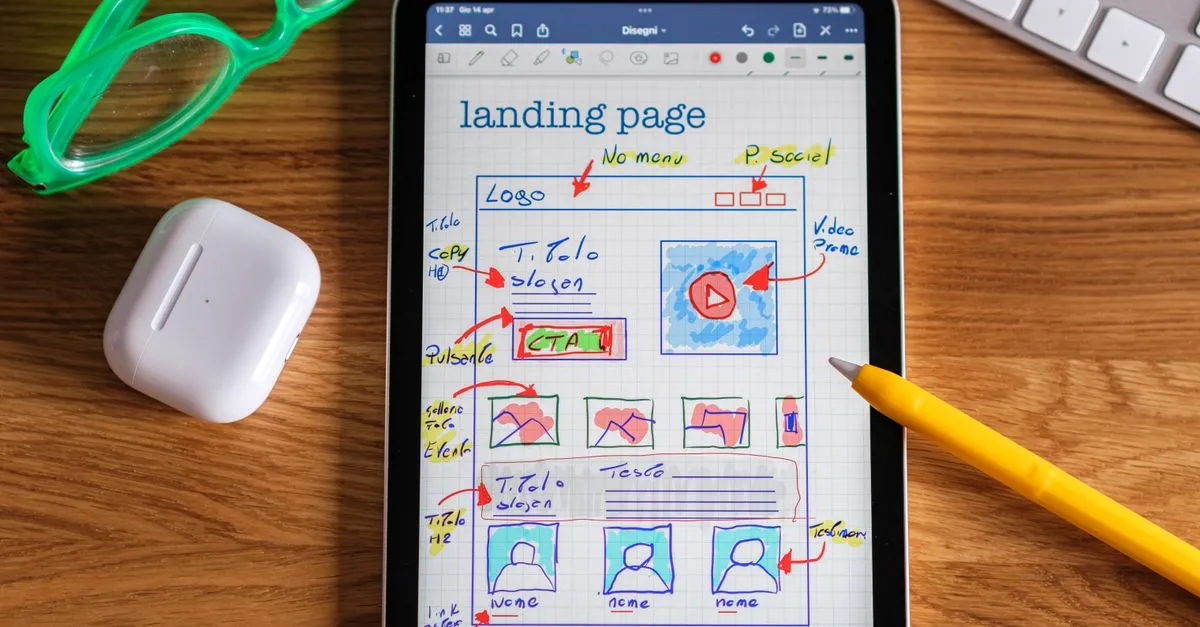
On-page SEO is not separate from the technical and design work; it sits on top of it. A page needs to be technically crawlable and then well-built on the page itself to actually reach the first page of Google. Google is not a mind reader. Tell it clearly what each page is, and it can rank you for it.
Frequently asked questions
What is on-page SEO?
On-page SEO is the optimization you do directly on a web page to help it rank: the title tag, meta description, headings, content, internal links, and images. It is the part of SEO you fully control, and it tells search engines what the page is about and why it should rank for a given search.
What is the difference between on-page and technical SEO?
On-page SEO optimizes the visible content and its structure, titles, headings, copy, and links. Technical SEO makes sure search engines can crawl, render, and index the site at all: speed, mobile-friendliness, and site architecture. You need both; on-page work only pays off once the page is technically reachable.
How long should a title tag be?
Aim for roughly 50 to 60 characters so it does not get truncated in search results, with the primary keyword near the start. Clarity matters more than hitting an exact length. Write it for a human choosing whether to click, and make sure it accurately reflects the page.
Do meta descriptions affect rankings?
Not directly. Meta descriptions do not boost your ranking on their own, but they influence whether people click your result, and click-through affects performance. A clear, compelling 150 to 160 character description with the keyword and a reason to choose you is worth writing for every page.
How many H1 tags should a page have?
One. Use a single H1 that contains the page’s primary keyword, then structure the rest of the content with H2s and H3s in a logical order. Multiple H1s or skipped heading levels muddy the structure for both readers and search engines.
What is the most important on-page SEO factor?
Matching search intent with genuinely useful content is the foundation; the title tag is the single strongest individual element. But they work together: a strong title on a page that does not answer the query will not hold a ranking. Optimize the whole page around one clear intent.
Optimize the page, then let it earn its spot
On-page SEO is the most controllable part of ranking, which makes it the best place to start. Get the title, structure, and content right on the pages that matter most, including optimizing your homepage specifically since it is often the first thing Google and people see, and you give Google every reason to rank you.
Do this page by page across your site and it is one of the most reliable ways I know to grow organic traffic over time. Not sure which pages need work first? Run a free audit to see how your key pages are set up, or explore our organic SEO service. Tell Google exactly what each page is. Guessing is not a ranking strategy.